
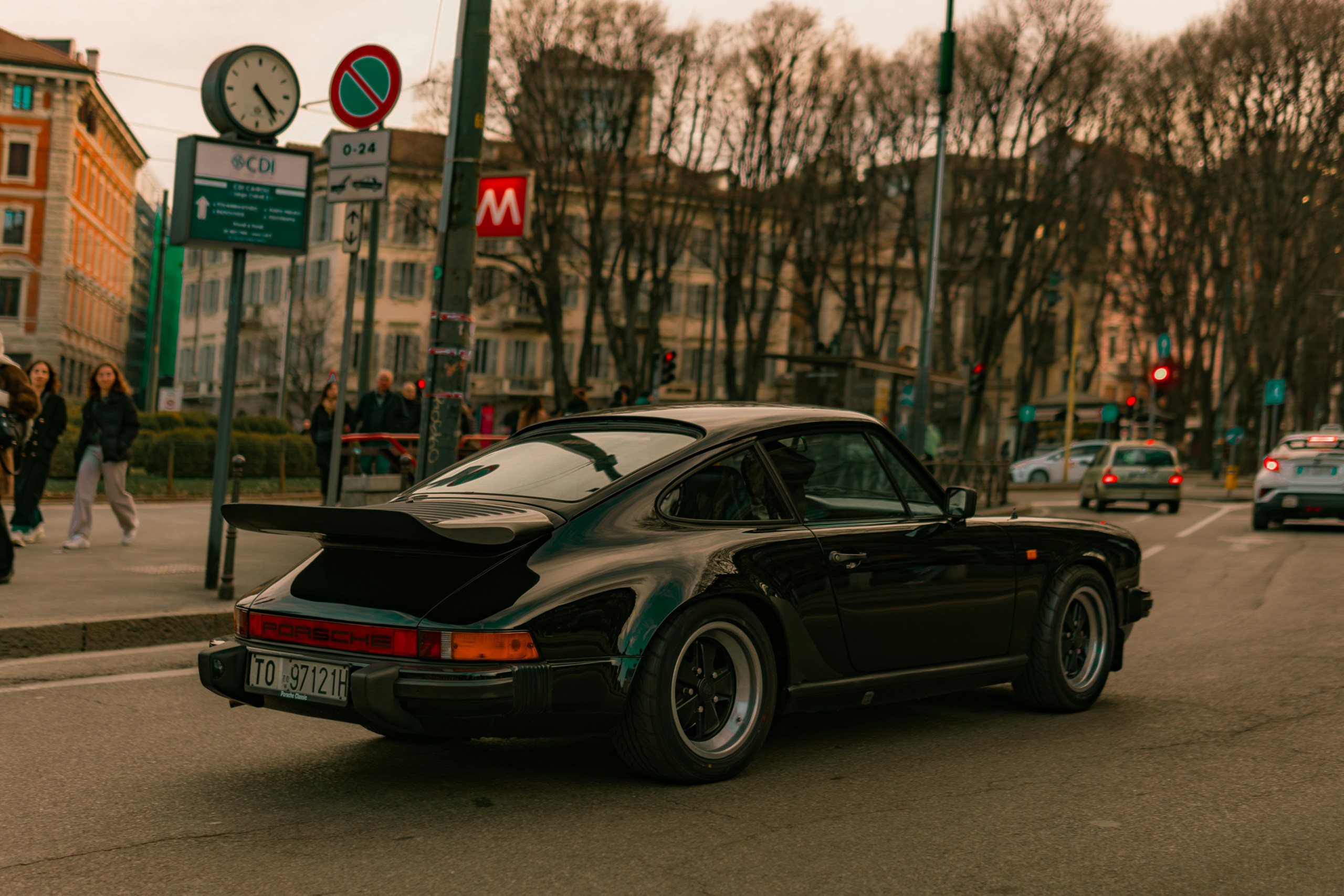
Air-cooled Porsche 911 care in Texas heat: a Carrollton guide
An air-cooled 911 can live happily through a North Texas summer if you understand how it sheds heat. Here is what to watch, what to change and what can wait.
Short answer
An air-cooled Porsche 911, from the early cars through the 993 that ended in 1998, cools largely through its oil. DFW summers call for a working front oil cooler and fan, a zinc-rich oil suited to the engine, and attention to oil leaks and aging fuel lines. KJLux Auto in Carrollton services these cars with ASE-certified technicians.
Key takeaways
- Oil does much of the cooling, so oil level, oil type and the front cooler all matter.
- Check the oil level hot, idling and on level ground, using the dipstick.
- Many Porsche specialists favor higher-zinc oils for these engines.
- Old rubber fuel lines are a fire risk, not a nuisance.
- Expect the A/C to struggle on a 100-degree afternoon, even when it is healthy.
How does an air-cooled 911 handle Texas heat?
It leans on its oil. A large engine fan pushes air over the cylinders and heads, while a dry-sump system circulates a big volume of oil, most of it stored in a separate tank, through the engine and its oil coolers. The oil carries heat out of the hottest parts, which is why the gauge to watch on these cars is oil temperature.
Traffic is the weak spot. The main fan runs off the crankshaft through a V-belt, so it moves the least air at idle, exactly when a 100-degree afternoon is working against you. Porsche added front-mounted oil coolers to help, and from the late 3.2 Carrera on, that cooler has its own electric fan. A thermostat sends oil forward only once it is fully warm. Because the main fan depends on its belt, replace a cracked or loose fan belt before summer, not after.
Expect the needle to sit higher in stop-and-go traffic than on the highway. Learn where it rests on a warm freeway run, then watch how far it climbs in a jam. A reading that keeps rising, or settles well above your normal, points to a problem:
- Low oil level, which only reads correctly when the engine is hot and idling
- A stuck oil thermostat that keeps oil out of the front cooler
- A front cooler fan, relay or switch that has quit
- Cooler fins packed with leaves and road grime
- A slipping or worn fan belt
Which oil should an air-cooled Porsche use?
One with the right viscosity for heat and a generous anti-wear package, which for many specialists means a higher-zinc oil. Zinc dialkyldithiophosphate, or ZDDP, lays down a protective film where metal parts slide against each other under heavy load. In these flat-sixes that includes the cam lobes and rocker arms. Modern API-rated passenger car oils carry less zinc and phosphorus than older formulas, largely to protect catalytic converters, so an oil that suits a new car is not automatically right for a 1980s 911.
Porsche now sells its own Classic Motoroil for air-cooled cars: a 20W-50 for 911s up to 2.7 liters and a fully synthetic 10W-60 for 911s of 3.0 liters and up. Some experienced Porsche engine builders suggest 20W-50 for street cars where average temperatures run above 90 degrees, a fair description of a DFW summer, while others run 15W-50 year-round. We match the oil to the engine, its condition and how you drive. Our oil change service page covers what a visit includes.
Check the level the way these engines need. Bring the engine to full operating temperature, park on level ground and read the dipstick with the engine idling. The dash gauge is only a reference, and readings taken cold or with the engine off are not reliable on these cars.
Does an air-cooled 911 need valve adjustments?
Most do. From the early cars through the 964, the valvetrain uses rocker arms with adjusting screws, and the clearance has to be checked and set by hand at the interval in the maintenance schedule. The 993 moved to hydraulic valve adjustment, so routine adjustments are not part of its service.
Getting the clearance right matters more in a hot climate. Loose valves mostly make noise. Tight valves are the bigger worry, because a valve that does not close fully cannot pass its heat into the seat and can burn. The job is done on a cold engine with the valve covers off, which makes it the natural time to replace valve cover gaskets that have started to weep.
Where do air-cooled 911s leak oil?
Mostly from aging gaskets and seals at a handful of well-known spots. A light weep is normal for an engine this old. Fresh drips on the garage floor are not. The table shows where we look first on a Porsche that is marking its parking spot.
| Leak point | What you notice | How urgent |
|---|---|---|
| Lower valve cover gaskets | A burning oil smell or wisps of smoke as oil drips onto the heat exchangers | Fix soon; it only gets messier |
| Chain housing covers | Oil at the back of the car on either side of the crankshaft pulley | Moderate; usually repairable with the engine in place |
| Oil return tube seals | Seepage at the tube ends, often after the car sits | Low; a quick replacement |
| Rear main seal | Oil between the engine and transmission | Higher; oil can ruin the clutch, and the transmission must come out |
| Case through-bolts and case seams | A slow weep along the crankcase | Often monitored until a rebuild |
| Oil filter and drain plugs | Oil on the inner splash shield or under the car | Low; check tightness and seals |
Why do old fuel and vacuum lines matter in the heat?
Because rubber ages faster in heat, and an air-cooled engine bay runs hot. Fuel hoses harden and crack after decades of heat and fuel vapor, and a hose can look fine on the outside while it fails from within. A fuel leak near a hot engine is a fire hazard. If you smell raw fuel, do not drive the car.
Have the fuel and breather hoses checked at every service. Some Porsche specialists recommend replacing rubber fuel lines every 10 to 15 years regardless of how they look. Vacuum hoses age the same way. A cracked one can cause a rough idle or hesitation, and on an older car several small leaks can add up to an engine that never runs quite right.
Why does air-cooled 911 A/C struggle in Texas?
Because air conditioning was added to a design that dates back to the early 1960s, and on a 100-degree afternoon even a healthy system is near its limit. Many G-series cars use one condenser in the engine lid grille and another behind the front bumper, feeding small dash vents. Many cars left the factory with R-12 refrigerant and have since been converted to R-134a.
A few things help. Start with a vacuum and leak test before adding refrigerant, since a system that will not hold vacuum will not hold a charge. Make sure the condensers are clean and their fans work. Beyond that, modern compressors and parallel-flow condensers are available as upgrades. Our A/C service page explains how we measure output instead of guessing.
How should you drive and store an air-cooled 911 in a DFW summer?
Drive it regularly, drive it long enough to get the oil fully hot, and pick your hours. Porsche notes that classic engines that sit or never fully warm up collect condensation and combustion residue, which can turn the oil acidic.
Before the first week of triple digits, have the fan belt, front cooler fan, oil level, fuel hoses and any fresh leaks checked in one visit. Our Texas heat car care checklist covers the batteries, tires and interiors every DFW car needs. After that, a few habits keep a summer car healthy:
- Drive in the morning or evening instead of rush-hour heat
- Skip short hops that never bring the oil up to temperature
- Avoid long idles in parking lots and drive-through lines
- Keep a battery maintainer on it if it sits for weeks
- Garage it or park in shade to slow the aging of rubber and trim
- Change the oil by time as well as miles
Questions about this topic
Is it normal for an air-cooled 911 to leak a little oil?
A light weep is common on an engine that is decades old, but steady drips deserve attention. Valve cover and chain housing cover gaskets harden with age and heat. If oil is reaching the heat exchangers, getting near the clutch or leaving spots overnight, have it looked at before it grows. A clean engine makes new leaks much easier to spot.
Is 20W-50 too thick for an air-cooled 911 in Texas?
Not for most street cars in a North Texas summer. Porsche's own Classic Motoroil for 911s up to 2.7 liters is a 20W-50, and some Porsche engine builders recommend 20W-50 where average temperatures run above 90 degrees. Engines of 3.0 liters and up have a 10W-60 Classic option. The right pick also depends on engine condition and how the car is used.
How often should a lightly driven air-cooled 911 get an oil change?
Base it on time, not just mileage. Oil picks up moisture and combustion byproducts when a car sits or makes short trips, and that happens whether or not the odometer moves. Some Porsche engine specialists suggest intervals as short as six months or 5,000 miles based on used oil analysis. Ask us to set an interval around how you actually use the car.
What should I do if my 911's oil temperature keeps climbing in traffic?
Get the car moving if you safely can, since the engine fan moves more air at higher rpm than at idle. If the needle keeps rising, pull over somewhere safe, shut the engine off and let it cool. Next time it is warm, check the oil level at idle. Then have the oil thermostat, front cooler fan and fan belt checked.