Suspension and steering repair in Carrollton
Air springs that sag overnight, clunks over expansion joints, a hum that grows with speed. We find the worn part and replace it with OEM or OEM-equivalent components.
- 5.0 on Google
- 36-month / 36,000-mile warranty
- ASE-certified technicians
KJLux Auto in Carrollton repairs suspension and steering on luxury cars and SUVs, from Land Rover, Mercedes Airmatic, Audi, Porsche and Escalade air suspension to control arm bushings, struts, shocks, wheel bearings, CV joints and steering racks. Qualifying suspension and steering repairs carry our 36-month/36,000-mile nationwide limited warranty.
Why do suspension parts wear out so fast in DFW?
It comes down to heavy vehicles, soft rubber and hard-used roads. A full-size luxury SUV can weigh well over 5,000 pounds on bushings tuned for comfort, and North Texas sits on expansive clay soil that swells in rain and shrinks in drought, cracking and heaving the pavement those bushings absorb.
Air suspension adds another layer. Rubber air springs age and crack, compressors wear out running overtime to cover leaks, and height sensors or valve blocks can fail. Our guide to Land Rover air suspension problems covers the usual failure points.
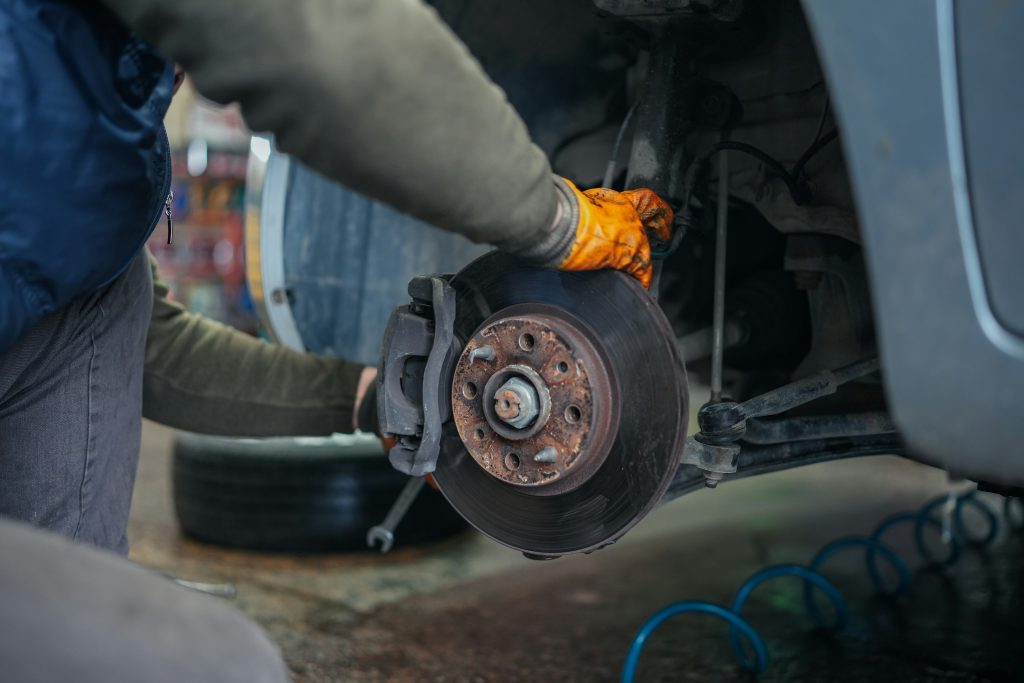
Steering is the other half. Worn tie rods and leaking or faulty racks change how the car tracks and chew up tires. We explain what is worn and why it matters, and if thin pads turn up while the wheels are off, our brake service can happen in the same visit.
What are the signs of worn suspension or steering?
- A corner, or the whole car, sitting low after parking overnight
- Suspension fault or ride height warnings on the dash
- Clunks over speed bumps, driveway lips or expansion joints
- A hum or growl that rises with speed and changes as you change lanes
- Clicking from the front wheels on tight turns in parking lots
- Steering that wanders, feels loose or shimmies under braking
- Bouncing after dips, or the nose diving hard when you stop
What suspension and steering repairs do we handle?
Air suspension
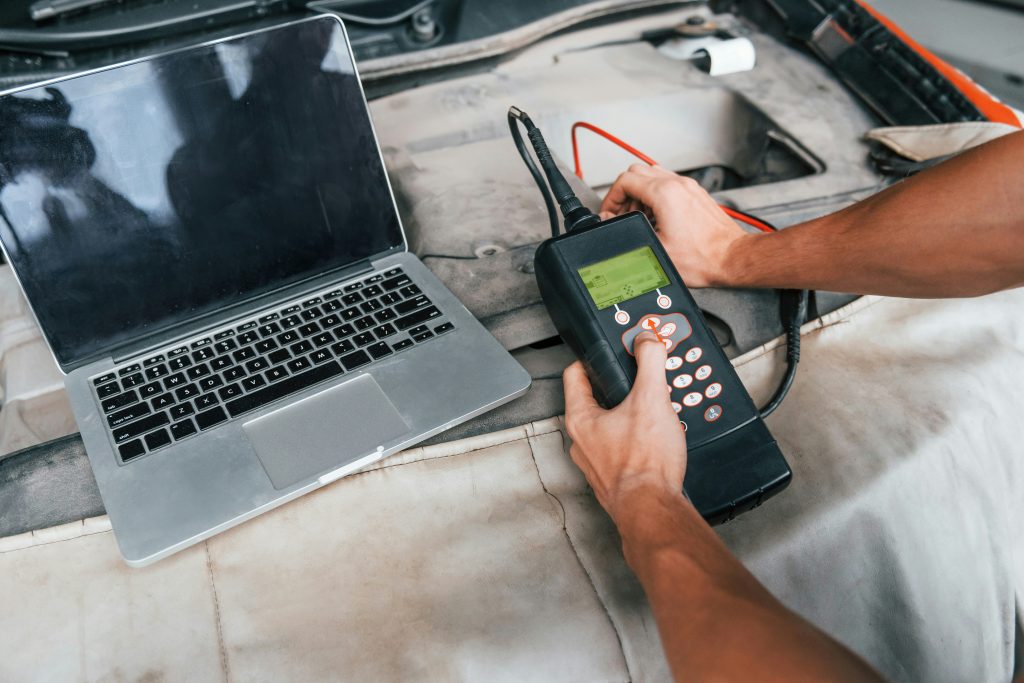
Air springs and struts, compressors, relays, valve blocks and height sensors, with ride height calibrated by scan tool afterward.
Control arms and bushings
Cracked or soft bushings and worn ball joints behind clunks, shimmy under braking and vague steering.
Struts and shocks
Conventional dampers and electronically adjustable units, including adaptive dampers that report faults to the suspension module.
Wheel bearings and hubs
Bearing noise pinned down by speed and load, then fixed with a hub assembly or a pressed-in bearing, depending on the car.
CV joints, axles and driveshafts
Torn boots, clicking outer joints and vibrating inner joints on front-wheel and all-wheel-drive cars, plus half-shafts, U-joints and driveshafts.
Steering racks and tie rods
Hydraulic rack leaks, electric rack faults and worn inner and outer tie rods, with the steering angle sensor calibrated when the job requires it.
What suspension problems are common by brand?
Land Rover
Range Rover, LR3, LR4 and Discovery air suspensions are known for leaking air springs, worn compressors and valve block faults that trigger suspension fault messages.
Mercedes-Benz
Airmatic cars, from the S-Class and E-Class to the GL and ML, are known for leaking air struts, and on older models a stuck compressor relay can burn out the compressor.
Audi
Front upper control arms in the A4, A5 and Q5 are a common source of clunks, and air-equipped A8 and Q7 models add strut and compressor wear.
Porsche
Cayenne and Panamera air struts and compressors wear with age, and PASM adaptive damper faults appear as suspension warnings we can read and trace.
Cadillac
Many Escalades use Magnetic Ride Control dampers that can leak, and Escalade and Yukon Denali models from 2021 on can have 4-corner air suspension.
BMW
Front thrust arm bushings on the 3 Series and 5 Series are known to wear and cause a shimmy under braking, and air-equipped X5 and X7 models add air springs to the list.
We also do this for
What affects the cost of suspension repair?
It comes down to 3 things: which part failed, whether the system is air or conventional, and how many corners need work. Air struts and compressors cost more than a control arm, and struts and shocks are best replaced in pairs.
Your free itemized estimate separates what is worn out now from what is starting to go, so you can plan the work. For common jobs, you can request a quote by VIN.
Warranty. Steering, suspension, wheel bearing, CV joint, U-joint, half-shaft and driveshaft repairs are covered categories under our 36-month/36,000-mile nationwide limited warranty on qualifying repairs, administered by Nationwide Protection Plus. Tires are not covered; see the warranty details for the full terms.
Guides on this topic
Suspension and steering questions
Can I drive my car if the air suspension is sagging?
Short trips are usually fine if the car still rises to normal height, but don't push it. A leak makes the compressor run far more than it was designed to, and a low corner can let the tire rub or the suspension bottom out. Some systems also limit speed once they detect a fault.
Is that noise a wheel bearing or my tires?
If it hums louder as speed rises and changes pitch when you weave gently, a wheel bearing is the likely cause, because the load shifts from side to side. Tire noise tends to change with the road surface instead. We confirm on a test drive and by checking the bearing for play on the lift.
How long do struts and shocks last?
There is no set mileage. Heavy vehicles and rough roads shorten their life, and the wear is gradual enough that many owners never notice. Bouncing after dips, nose dive under braking, oily residue on the shock body and cupped tires are the signs to watch for.
Why does my car need an alignment after suspension work?
Because replacing control arms, tie rods or struts can shift the wheel angles that keep the car tracking straight. Even a small change shows up as uneven tire wear or a steering wheel that sits off center. When a repair touches those angles, we tell you an alignment is needed.
What causes a clicking noise when turning?
A worn outer CV joint is the most common cause, usually after its rubber boot tears and lets grease out and grit in. The click is loudest on slow, tight turns. Caught early, a torn boot can sometimes be replaced before the joint is damaged; once it clicks, the axle or joint usually needs replacing.