
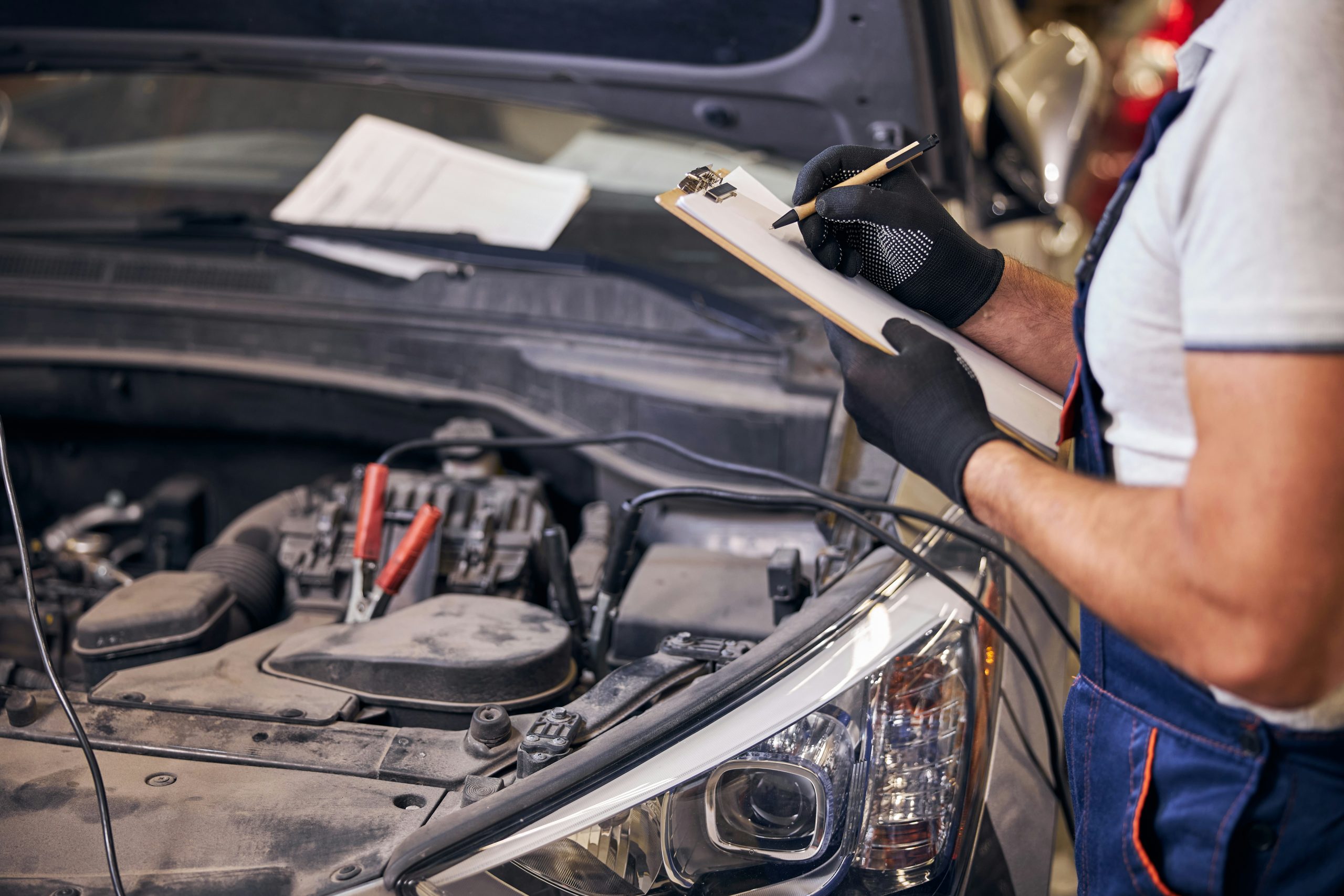
Used luxury car inspection checklist for Carrollton buyers
Use this checklist before you hand over a deposit. It covers what you can check yourself and what needs a lift and a scan tool.
Short answer
Before buying a used luxury car, check its history and open recalls by VIN, review service records, look for leaks, repairs and uneven tire wear, test drive it from a cold start, then have every module scanned and the car inspected on a lift. KJLux Auto in Carrollton performs pre-purchase inspections on the luxury brands it services.
Key takeaways
- Check history, title and open recalls by VIN before you visit.
- Ask for the car cold, and start it yourself.
- A full module scan finds faults the dashboard will not show.
- Have a shop inspect it on a lift before you pay.
What should you check before you see the car?
Start with the VIN. It unlocks most of what you need to know before you spend a Saturday driving across town. A history report is a starting point, not proof, because not every accident or repair gets reported. That is why the physical inspection still matters.
- Run a vehicle history report for title brands, accidents and odometer readings
- Check open recalls on NHTSA's recall lookup tool
- Ask for service records and look for gaps in dates and mileage
- Ask whether any factory or certified pre-owned warranty remains, and whether it transfers
- Ask why the owner is selling and how long they have had it
Why do service records matter so much on a luxury car?
Because known weak points are expensive. A Range Rover with documented air suspension work, or a BMW with a recent cooling system refresh, is a different purchase from the same car with no history at all. Records also show whether oil was changed on time with the right approval, which tells you how the engine was treated.
What should you look for on the walk-around?
Look for signs of repair, neglect and water. Walk the car in daylight and crouch to sight down each side. Bring a flashlight and check the wheel wells and the edges under the hood for overspray, mismatched bolts or tool marks on fasteners that suggest a panel was replaced.
Hail dents are not a deal-breaker by themselves. If the paint is intact, paintless dent repair can often restore the panels, so get the damage assessed and priced in; our hail dent repair page explains how that works. On the walk-around itself, check for:
- Paint that does not match between panels, uneven panel gaps or overspray on rubber trim
- Small dents across the roof and hood, common after North Texas hail storms
- Mismatched tires, or tread worn unevenly across the width
- Tire age: the final 4 digits of the DOT code give the week and year of manufacture
- Fogged headlights, cracked glass, or one window from a different glass maker than the rest
- A musty smell, damp carpet, silt under the seats or rusty seat rails, all signs of water damage
How should you test drive a used luxury car?
Ask the seller not to start the car before you arrive. A cold start reveals noises, smoke and slow cranking that a warm engine hides. Then drive long enough for the engine and transmission to reach full temperature, including some highway speed. Turn the radio off, and if you can, bring a friend to listen from outside at startup.
- Listen at startup for a rattle, which can point to timing chain wear on some engines
- Watch every warning light come on, then go out
- Run the A/C on max and feel the vent temperature, a must in Texas
- Feel the shifts at light throttle and under hard acceleration
- Brake firmly from highway speed and feel for pulsing or pulling
- Make slow, full-lock turns in a parking lot and listen for clicking or binding
- On air suspension, cycle through every ride height
- Test every screen, camera, seat, window and the sunroof
- Check that cruise control and driver-assist features work without warnings
What does a professional pre-purchase inspection add?
A lift and a scan tool. Many faults never show up on a test drive, and a dashboard can look clean because codes were cleared recently.
A full module scan with brand-specific software reads stored and history codes from systems a basic code reader cannot reach, such as the airbag, transmission and air suspension modules. It also shows the emissions readiness monitors. If several are not ready, the codes may have been cleared right before the sale.
On the lift, a technician sees what you cannot: oil and coolant leaks, worn suspension bushings, brake pad and rotor thickness, torn CV boots, exhaust damage and signs of collision repair underneath. A thorough inspection also covers the battery and charging system and the condition of the brake fluid. A good inspection tells you what is fine, too. Knowing the brakes have plenty of life left, or that a seep is minor, is as useful as a list of problems. At KJLux Auto, we walk you through what we found, what is urgent and what is normal wear for the car's age. Each brand also has known weak points worth asking about:
| Brand | Known weak points to check |
|---|---|
| BMW | Oil leaks at the valve cover and oil filter housing gaskets; water pump and expansion tank |
| Mercedes-Benz | AIRMATIC air suspension on GL, GLS and S-Class; balance shaft and idler gear sprocket wear on earlier M272 and M273 engines |
| Audi | Carbon buildup on direct-injection 2.0T and 3.0T engines; timing chain tensioners on earlier 2.0T engines |
| Porsche | IMS bearing on M96 and M97 engines in 996 and 997 911s; coolant pipes on early Cayenne V8s |
| Land Rover | Air springs, compressor and valve block on air suspension models |
What paperwork should you check before you pay?
Paperwork problems can cost more than mechanical ones. Make sure the seller signs the title over correctly and that you leave with what you need to register the car. Before money changes hands, confirm:
- The name on the title matches the seller's ID
- The title has no salvage, rebuilt or flood brand
- The VIN on the title matches the dashboard and the door jamb
- The odometer reading lines up with the service records
- Any lien is released or will be paid off at the sale
- Open recalls are noted, since the dealer fixes them free even on a used car
Which red flags mean you should walk away?
Water damage, a seller who blocks an inspection and unexplained warning lights top the list. These findings are not about price. They are about risk. One red flag is a reason to ask hard questions, and two or three usually mean there is a better car out there. Walk away, or at least slow down, if you see any of these:
- Signs of water damage inside the cabin or trunk
- A seller who will not allow an independent inspection
- Many modules with stored communication faults, which can point to wiring or water problems
- Warning lights the seller explains away instead of documenting
- Fresh undercoating or heavy engine bay cleaning that hides the areas you need to see
How do you book a pre-purchase inspection at KJLux?
Call or text (469) 289-1291, or use our appointment page, with the year, make, model and VIN. Ask the seller to let the car sit so we can see a cold start. If the car is at a dealer or a private seller's home, ask whether they will bring it to us or let you bring it. We are in Carrollton, a few minutes from I-35E, the Bush Turnpike and Belt Line Road. See our pre-purchase inspection page for details, and if you are shopping for a Range Rover, read up on Land Rover air suspension problems first.
Questions about this topic
When should I schedule a pre-purchase inspection?
Book it after you have agreed on a price in principle but before you pay or sign anything. That leaves room to renegotiate or walk away if the inspection finds problems. KJLux offers same-day or next-day appointments for most services, which helps when a seller has other buyers lined up.
Is a certified pre-owned car worth inspecting too?
Yes. A certified pre-owned inspection is done by the selling dealer. An independent check gives you a second set of eyes from someone with no stake in the sale, and it can catch leaks, worn brakes or stored fault codes while you can still negotiate.
Can a seller hide problems by clearing codes?
They can clear stored codes, but it is hard to hide that they did. Clearing codes resets the emissions readiness monitors, which need a stretch of normal driving to complete again. A full scan showing several monitors not ready is a reason to ask questions or come back after the car has been driven.