
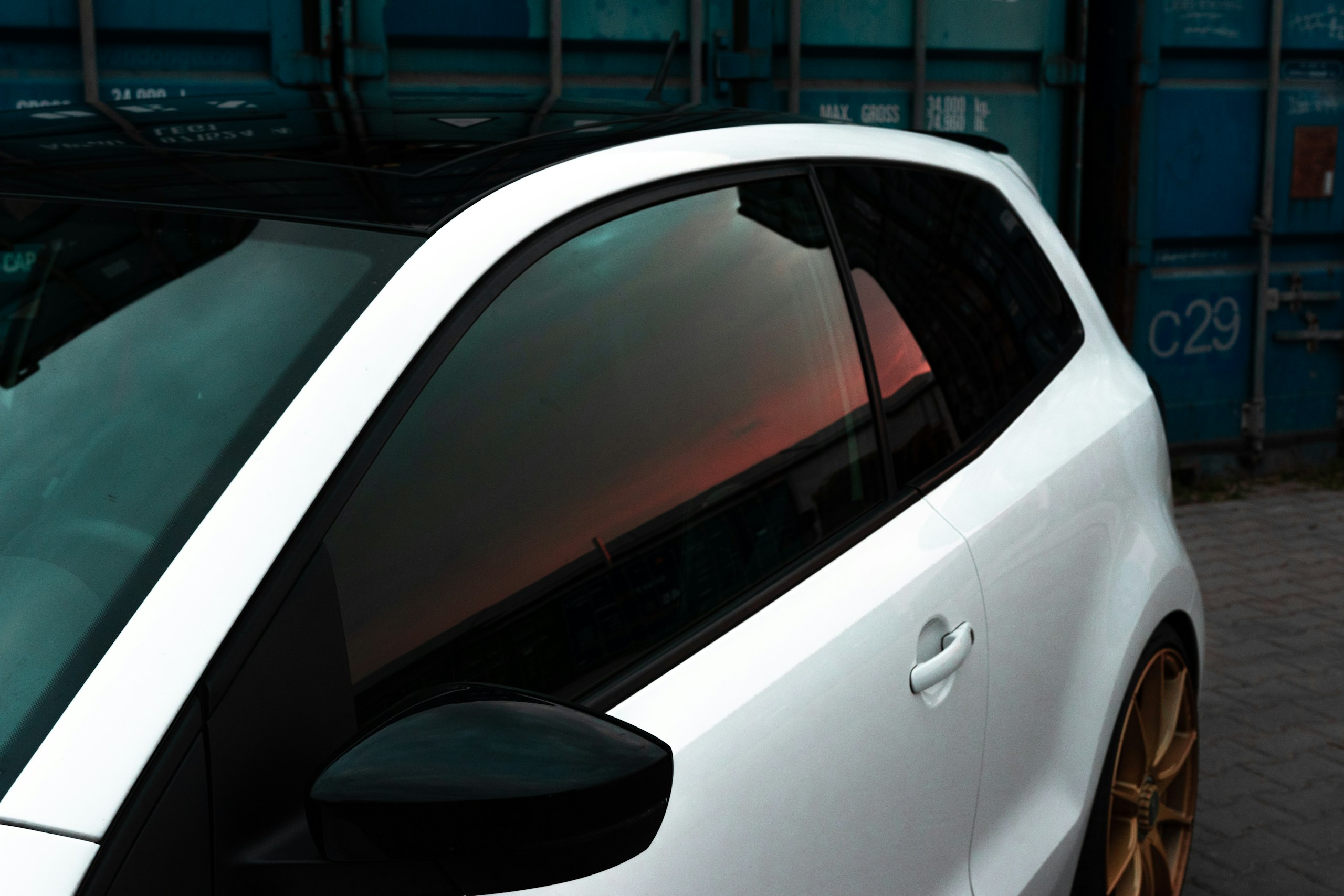
Texas window tint law explained for Carrollton drivers
What Texas allows on each window, how tint is measured, what the sticker and the medical exemption cover, and how to keep a car cool at a legal shade. General information, not legal advice.
Short answer
On the front side windows, Texas allows tint only if film and glass together still pass 25% or more of visible light and reflect 25% or less. Windshield tint can't extend below the AS-1 line or 5 inches from the top, and side windows behind the driver have no limit. KJLux Auto in Carrollton installs ceramic film within those rules.
Key takeaways
- Front side windows: at least 25% light through and no more than 25% reflectance, film and glass measured together.
- Windshield film can't go below the AS-1 line or 5 inches from the top, whichever is higher, and can't be red, blue or amber.
- Side windows behind the driver have no darkness limit, and the back glass has none when both outside mirrors work.
- Darker front glass needs a signed physician or optometrist statement kept in the car.
- Ceramic film cuts heat by blocking infrared, so staying cooler doesn't require going darker.
How dark can window tint be in Texas?
It depends on the window. Texas Transportation Code Section 547.613 sets tint rules by window position, and the Texas Department of Public Safety (DPS) publishes the same limits in its window tinting standards. Two numbers matter: light transmission, the share of visible light that gets through, and luminous reflectance, how mirror-like the glass looks from outside. Here is how the law treats each piece of glass:
| Window | What Texas allows | In plain words |
|---|---|---|
| Windshield | Film no lower than the AS-1 line or 5 inches from the top, whichever is closer to the top; 25% or more light; 25% or less reflectance; not red, blue or amber | A sun strip across the top, nothing on the main viewing area |
| Front side windows and vent windows | 25% or more light and 25% or less reflectance, film and glass measured together | The darkest legal shade sits right beside you |
| Side windows behind the driver | Exempt | Any shade |
| Rear window | Exempt if outside mirrors on both sides show the road at least 200 feet back; otherwise 25% or more light and 25% or less reflectance | Any shade on a car with two working side mirrors |
How is window tint measured, and is there any tolerance?
Tint is measured through the film and the glass as one unit, not by the number printed on the film box. The glass absorbs some light on its own, and the losses multiply: a film rated 30 percent on glass that passes 80 percent reads about 24 percent, which is under the limit.
The statute does leave a little room. Section 547.613 lets DPS treat a front side window as compliant when its light transmission or reflectance misses the standard by no more than 3 percent. That margin is DPS's call, not a right, and it covers only the windows beside the driver. Plan for a true 25 percent or lighter.
Reflectance and color have limits of their own. The 25 percent reflectance cap applies to the windshield strip and the front side windows, which rules out mirror-finish film there. The ban on red, blue and amber is written into the windshield rule specifically. None of this is legal advice, and laws and DPS rules change, so check the current statute or ask an attorney about your own situation.
Are the tint rules different for trucks and SUVs?
No. Texas sets limits by window position, so a sedan, a pickup and a three-row SUV follow the same rules on the windshield and front side windows. The darker rear glass you see on many SUVs and pickups is usually factory privacy glass, and the statute exempts factory-tinted glass that meets federal standards. A few other exemptions come up often:
- Side windows behind the driver are exempt on every vehicle, and the statute repeats that exemption for multipurpose vehicles.
- Vehicles not registered in Texas are exempt from Section 547.613, so the Texas limits start applying when you register here.
- Selling a car with noncompliant tint is not an offense under the section, but the buyer inherits the problem.
How does the Texas medical exemption for tint work?
It works through a signed statement, not a permit. A licensed physician or optometrist signs a statement that identifies the driver or an occupant with reasonable specificity and says darker tint is needed to protect that person's health. DPS stopped issuing window tint exemption certificates on January 1, 2019, so the statement itself is the proof.
Under the DPS rule, the exemption allows darker film on every window except the windshield. Below the AS-1 line, the windshield can take only untinted film that lowers visible light by no more than 5 percent. The statute makes a medical need to be shielded from direct sun a defense to a tint charge, so carry the statement whenever the vehicle is on the road.
What is the Texas tint compliance sticker?
It's a small label the installer places between the film and the glass at the lower rear corner of the driver's side window, readable from outside. Texas requires one per vehicle, on the driver's window; a second on the passenger side is optional. DPS lists “Complies with TTC 547.613 (b)” as the wording in current use, and the installer's name is optional.
The label is the installer's legal duty, not yours. A tint business that applies film without a compliant label faces a fine of up to $1,000 under the same section, and film manufacturers must certify their products to DPS. Tint with no label is a hint that the job may not have followed the rules, though what decides a citation is the meter reading.
What happens if you're pulled over for dark tint?
An officer can check your front side windows on the spot with a handheld tint meter, and a reading under the limit can mean a citation. Driving with noncompliant tint is a misdemeanor under Section 547.613, and the Transportation Code's general penalty for this kind of offense is a fine of up to $200.
Texas ended safety inspections for non-commercial vehicles on January 1, 2025, so an inspection station no longer flags dark film before an officer does. If you carry a medical statement, hand it over with your license and insurance. If the film is simply too dark, the fix is removing it and installing a shade that meets the limit, which is also a good time to replace older film that has bubbled or faded.
Can ceramic film keep a car cooler without going darker?
Yes. How dark a film looks and how much heat it stops are separate properties. Visible light is only part of the sun's energy, and much of the heat you feel on your arm through the glass is infrared, which you can't see. Ceramic film is loaded with tiny non-metallic particles that target infrared, so a fairly light ceramic can reject more heat than a much darker dyed film.
When you compare films, look past the shade. Total solar energy rejected, usually listed as TSER, and infrared rejection say more about comfort than the light transmission number. A practical legal setup for a North Texas commute is a lighter ceramic on the front side windows, a darker shade behind the driver and a sun strip across the top of the windshield. DPS also allows clear film that only blocks UV over the whole windshield, but a film that noticeably cuts visible light below the AS-1 line isn't covered by that allowance.
On a car with a camera behind the mirror, ask how the sun strip will be trimmed around the camera housing; our guide to windshield cameras and calibration explains why that patch of glass matters. For film choices, see our ceramic window tint service, and for the rest of the summer checklist, read our Texas heat car care guide. If the cabin still runs hot with good film, have the A/C system checked.
Questions about this topic
Is 20% tint legal on front windows in Texas?
No. The windows beside the driver need 25 percent or more light transmission, measured through the film and glass together, and a film rated 20 percent reads lower than that once it's on factory glass. The small variance DPS may allow under Section 547.613 doesn't stretch that far. Behind the driver, 20 percent or darker is legal.
Is mirrored or reflective tint legal in Texas?
Only within limits up front. The windshield strip and the front side windows can reflect no more than 25 percent of light, which rules out most mirror-finish film there. The statute exempts the side windows behind the driver, and the rear window when both outside mirrors work, so the reflectance cap doesn't reach those. Ceramic film keeps reflectance low while still cutting heat.
Do Texas tint laws apply to cars registered in another state?
Not while the car stays registered elsewhere. Section 547.613 exempts vehicles that are not registered in Texas, so the Texas limits don't apply to a visitor's car. Once you move here and register the car in Texas, the state's limits apply, and front side film that was legal back home may have to come off.
Can I sell a car with tint that's too dark in Texas?
Yes. The statute says offering a vehicle for sale or selling one with noncompliant windows is not an offense under Section 547.613. The buyer, though, can be cited the first time they drive it with front windows under the limit. If you're the buyer, look for the compliance label and ask for a meter reading before you sign.