
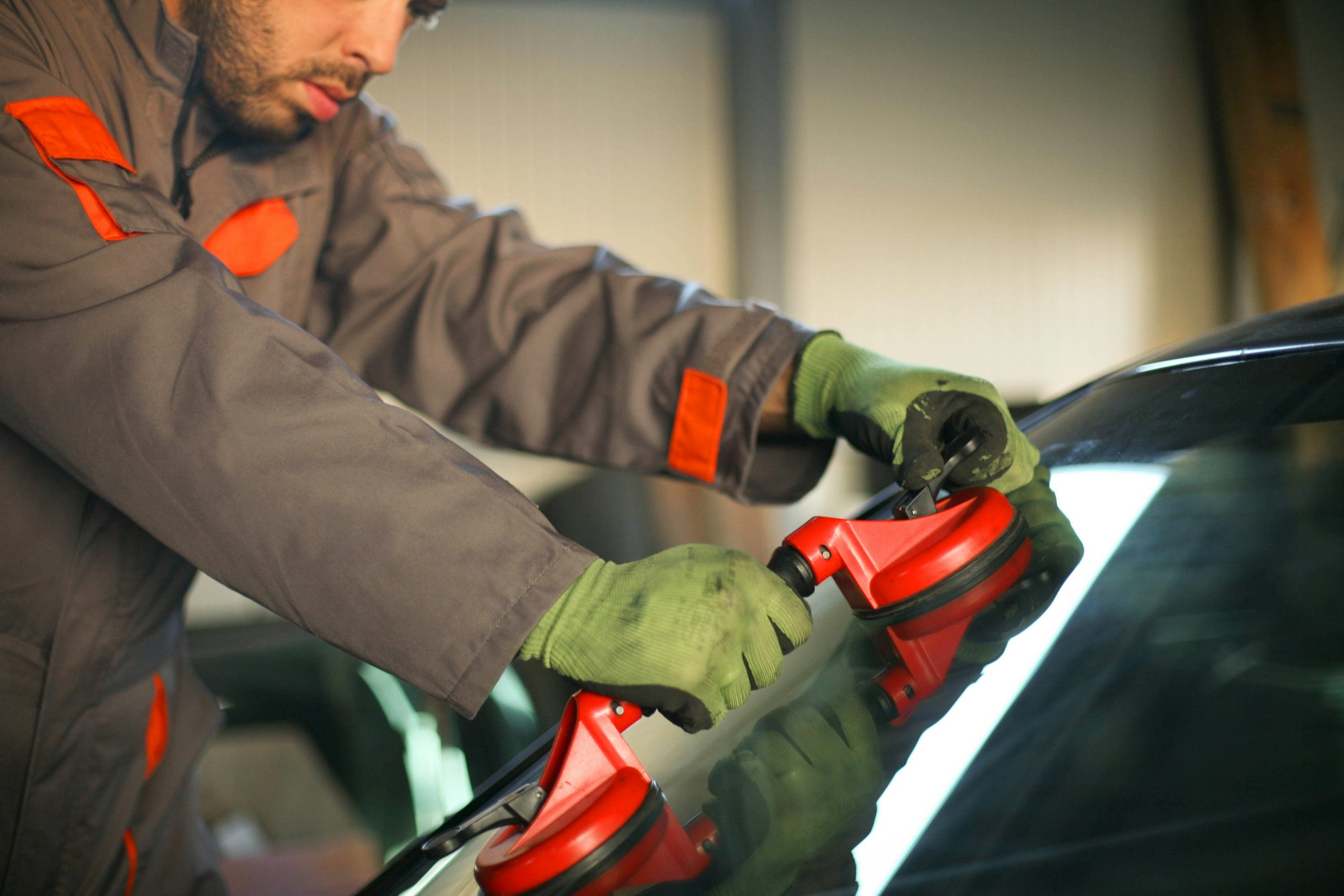
Windshield replacement and ADAS calibration: a Carrollton guide
Lane keeping and automatic emergency braking rely on a camera that looks through your windshield. Here is why it needs calibration after new glass, how that's done and what to ask before the job.
Short answer
After a windshield replacement, many automakers call for the camera behind the mirror to be recalibrated so lane keeping and automatic emergency braking read the road correctly. It's done with targets in a shop (static), on a road drive (dynamic) or both. KJLux Auto in Carrollton tells you before you approve the job what your model requires.
Key takeaways
- The forward camera aims through the glass, so new glass changes what it sees.
- Static calibration uses targets in a shop, dynamic calibration uses a road drive, and some cars need both.
- GM, Ford and Honda have each warned that non-original glass can affect these systems.
- A quiet dashboard isn't proof of a good calibration. Ask for the scan tool record.
Why does a windshield camera need calibration after new glass?
Because the camera looks through the glass and is mounted to it. On most cars with lane keeping or automatic emergency braking, the camera sits in a bracket bonded to the inside of the windshield behind the mirror. New glass brings a new bracket, a slightly different seat in the opening and its own optics, and the camera comes off and goes back on during the job.
Small errors grow with distance. One degree of misaim works out to nearly 6 feet of error about 330 feet ahead, far enough down the road to matter at highway speed. That's the gap between a car that reads your lane correctly and one that nudges you toward the line. GM, for one, calls calibration critical whenever a windshield is removed and replaced on a vehicle with a front-view windshield camera.
The same camera often feeds several features: lane departure warning, lane keeping or centering, forward collision warning and automatic emergency braking, traffic sign recognition and automatic high beams. On many cars it also supports adaptive cruise control.
What's the difference between static and dynamic calibration?
Static calibration happens with the car parked in front of precise targets; dynamic calibration happens on the road. The manufacturer's procedure decides which one your car gets, not the shop's preference, and some models need both, usually static first.
Either way, the car has to be set up exactly as the manufacturer specifies before the routine starts. Common requirements include the correct tire pressures, a full or specified fuel level, no heavy cargo, correct ride height, a clean windshield in front of the camera and, on some models, a wheel alignment first. Skipping any of these can leave the camera calibrated to a car that isn't sitting the way it normally does.
Around DFW, dynamic calibrations go best on a dry day on a well-marked highway. Spring storms, low sun glare and long construction zones with shifted lanes can keep the system from finishing, so it can take more than one drive.
| Method | Where it happens | What it needs | What can stall it |
|---|---|---|---|
| Static | Indoors, car stationary | Targets at an exact height, distance and angle from the car, a level floor, even lighting and a scan tool | Uneven floors, glare, reflective surfaces, a target set a few millimeters off |
| Dynamic | On public roads | A scan tool to start the routine, a steady speed in the range the procedure sets, straight roads with clear lane lines and light traffic | Rain, faded lines, construction zones, heavy traffic |
Does OEM or aftermarket glass matter for the camera?
It can. The camera needs a distortion-free view through a small patch of glass and a bracket in exactly the right spot. Several automakers have said so in position statements. Honda, covering Honda and Acura models, warns that anything other than an original equipment replacement windshield may cause these systems to work abnormally. Ford says aftermarket glass may not give accurate camera position or distortion-free vision, and GM says it does not approve non-GM glass for windshield replacement.
Not every automaker has taken a position, and what matters most is a part that matches your car's glass in shape, optics, bracket location and features. You choose between OEM-equivalent glass made to the automaker's specification and genuine OEM glass, and the estimate names which one you're getting. If your automaker has published a statement calling for its own glass, that's a strong reason to ask for it. Using insurance? Ask your insurer which glass the policy will pay for before the part is ordered.
How can you tell if the camera calibration is off?
Warning messages are the obvious sign, but behavior counts too. For the first few drives after any windshield replacement, watch for:
- A message that lane keeping, collision warning or the front camera is unavailable
- Lane keeping that tugs toward one line, or departure alerts while you're centered
- Lane centering that rides consistently off to one side
- Collision alerts for cars in the next lane, or for nothing at all
- Speed limit signs misread or missing from the display
- Automatic high beams switching at odd times
What about head-up displays, acoustic glass and rain sensors?
Each one has to carry over to the new glass. A head-up display projects onto the windshield, and the image reflects off both the inner and outer surfaces. HUD windshields use a wedge-shaped inner layer that lines those two reflections up into one, while plain glass leaves a ghosted double image. Honda points out that HUD and non-HUD windshields look the same, which is why the order should go by VIN. The HUD height setting in your menus adjusts for seating position; it can't correct the wrong glass.
Acoustic windshields add a sound-damping layer, and GM notes that aftermarket glass may leave out such features and raise cabin noise. Heated and coated windshields carry metallic layers too, and many leave a marked uncoated patch near the mirror for toll tags. A replacement without that patch can stop the tag from reading.
Rain sensors shine infrared light into the glass and read how much bounces back; water on the outside changes that reflection. The sensor clips to a bracket on the new glass through a clear coupling pad, and a trapped bubble throws off its readings. Volvo's schedule for recent models even includes cleaning the windshield in front of the camera at the first 20,000-mile service; see Volvo service intervals explained.
What should you ask a glass shop before replacing a windshield?
Ask enough to know exactly what's going on your car and how the camera will be handled. These questions work at any shop, including ours:
- Which features does my VIN show: HUD, acoustic layer, heating, coating, rain sensor, camera bracket?
- Is the glass genuine OEM, OEM-equivalent or aftermarket, and does it match all of those features?
- Does the manufacturer call for calibration on my model, and is it static, dynamic or both?
- Who performs the calibration, and where?
- Will I get pre-scan, post-scan and calibration records?
- Is calibration its own line on the estimate?
How does KJLux handle windshield jobs on camera-equipped cars?
We start from your VIN, so the quote reflects the features your original glass carries. Our auto glass estimate lists glass, labor and calibration as separate lines, and we check your model's calibration requirement up front and explain how it will be done, so nothing about the camera surprises you after the glass is in. If a driver-assist warning appears later, our diagnostics work can read the camera module and show what it reports.
One note on coverage: our 36-month/36,000-mile repair warranty excludes glass, so ask what coverage applies to your windshield and read the warranty terms before you approve the job.
Questions about this topic
Can I skip ADAS calibration if no warning lights come on?
It's not a good idea. The calibration step comes from the manufacturer's repair procedure, and a dark warning light only means the system hasn't flagged a fault; it doesn't confirm the camera is aimed to spec. Ask for the calibration record from the scan tool so you know the routine ran and passed.
Does a windshield chip repair require camera calibration?
Usually not. A resin repair leaves the original glass, the bracket and the camera in place, so the camera's aim doesn't change. The case to watch is damage right in front of the camera, since a blemish in its view can affect what it sees. Point out where the chip sits when you show it to us, and we'll tell you whether repair makes sense.
Can a wheel alignment affect my windshield camera?
It can on some models. The camera judges the lane relative to the direction the car is pointed, so changes to alignment or ride height can shift that relationship, and some manufacturers call for calibration after alignment or suspension work. Ask whenever the car's geometry changes, including after lowering springs, a lift kit or air suspension repairs.
Can a dash cam or toll tag interfere with the windshield camera?
Yes, if it sits in the camera's field of view. Owner's manuals for camera-equipped cars generally warn against mounting anything on the glass in front of the camera, and that includes dash cams, toll tags and stickers. Mount accessories outside the camera housing's area, and check your manual for the exact zone to keep clear.